The 3-Day Prague Itinerary a Local Would Plan
Almost every three-day Prague itinerary walks the same short loop: the astronomical clock, the Charles Bridge, the castle, a beer garden with an English menu. It is genuinely beautiful, and you could see all of it in a morning. The problem is that most itineraries spread that morning across three days and call it a trip.
Prague is compact and its trams and metro are quick and cheap, so the rest of the city is never far. The old town is worth your time, but it is not worth your whole weekend. This is the shape a local would give three days: the famous part done early and done properly, and the rest spent where the city actually happens.
How to think about three days in Prague
- The old town is a morning, not a base. It is the one part of Prague genuinely transformed by the hour you see it, and the difference between early and late is the difference between a city and a queue.
- Leave the centre in every direction. Almost nothing in this guide is within walking distance of the astronomical clock, and that is not a coincidence. The districts worth your time sit in a ring around the old town, north, east and south of it.
- Get comfortable with the trams. They go everywhere, they come constantly, and riding one across the water is half the pleasure of the place.
- Push doors. Prague hides behind ordinary facades more than any city its size: courtyards, cellars and passageways that give no clue from the street. The building that looks like nothing is the one worth trying.
Day one: the old town, early and then behind you
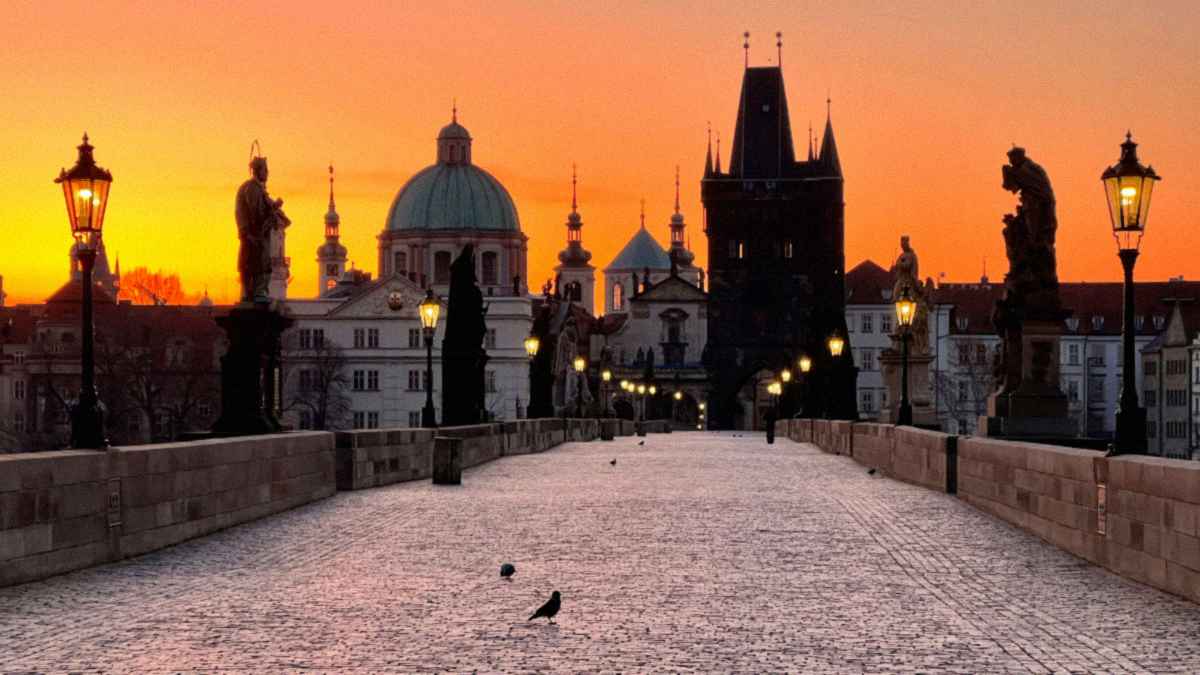
Set an alarm you will resent. The Charles Bridge at first light, statues coming out of the river mist and almost nobody on it, is one of the great free experiences in Europe. It is a completely different object later in the day, when it becomes a slow-moving crowd with a view. Walk it before the city is up, carry on into the old town square, and watch the astronomical clock do its thing with room to breathe.
The castle is up the hill from there, and it is less a building than a walled district. It will absorb as much of your trip as you leave unguarded, so decide in advance what it gets. That decision is the first real one of the weekend, and there is no universal right answer to it: it depends entirely on how you feel about state rooms and how you would otherwise have spent the afternoon.
Then leave. Head east, up into Žižkov, and let the day change character completely.
Žižkov is the old working-class district, and it has a density of neighbourhood pubs that no other part of Prague comes close to. Which one is the right one is not a question worth researching: it is whichever is full on the night you are there, and the ability to walk into a street of them and pick is the whole appeal. Above it all stands an enormous Brutalist television tower with giant babies crawling up the outside, which is exactly as strange in person as it sounds, and a fair summary of a city that does not take its own postcard too seriously.
Somewhere in the same district is Kino Přítomnost, an independent cinema with two-seater sofas and a bar inside the screening room itself. It is a very Prague combination, and a better last hour than another round in the centre.
Day two: Holešovice, the day the guidebooks skip
This is the day you will remember, and no part of it appears on the standard loop.
Look for a plain door on Tusarova Street that gives nothing away. Behind it is Vnitroblock, an old factory turned into the best industrial hangout in the district: a serious café, a tiny basement cinema, design shops, and a courtyard full of well-dressed locals who clearly did not come for the novelty. Check their calendar before you go, because there is almost always something on, and landing on the right day turns a good stop into the reason you remember the trip.
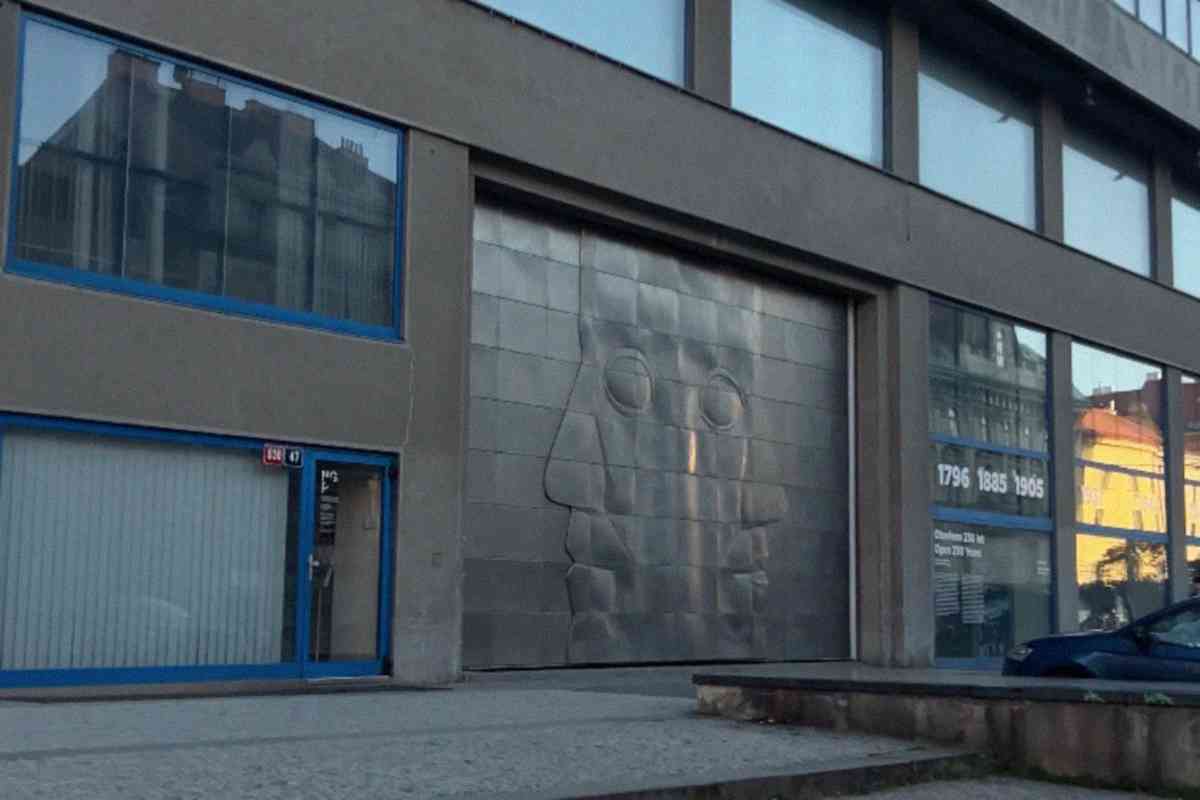
The Veletržní palác is the other reason to be here. It is a vast Functionalist building holding the National Gallery’s modern collection, and the remarkable thing is not only the Klimts and the Picassos, though they are there. It is that a collection this good is almost never crowded. You can stand in front of the Czech avant-garde with nobody breathing on your shoulder, ten minutes from a square where several thousand people are queuing to photograph a clock. Kolektor, the café on the ground floor, keeps the same functionalist calm the building does, and it is where you go afterwards.
If the weather is with you, there is water. Beside the zoo, just north, sits a genuine whitewater slalom canal that still hosts World Cup races, where you can rent a kayak and paddle the calm upper section, or take on the rapids below if that is who you are. Almost no visitor to Prague knows it exists.
Day three: south to Sapa
Day three of a city break is usually half a day with a flight at the end of it. Spend it on one thing rather than three, and make it the one nobody else’s itinerary will send you to.
Sapa is a Vietnamese market south of the centre, built inside a former poultry plant, and it is the largest Vietnamese marketplace in Central Europe. It is colourful, chaotic, and organised on a logic you will not work out in a single visit: grocers hidden in the mazes of the buildings, a Buddhist temple sitting in the middle of it, and food that is the reason to come.

The rule for lunch is simple and it always works. Follow the local queues.
If your flight is late enough to give you the whole day, spend what is left of it in Vinohrady. Grébovka is a park on a slope there, with a working vineyard running down it and a pavilion at the top where you can drink what the hill makes, and the streets below are where Prague has its coffee. Náměstí Míru puts you back on the metro to the old town whenever you want it. There is no particular hurry.
A few things that make it work
- The old town is the middle, not the map. Every district in this guide is ten or fifteen minutes out from it on a tram or the metro. Once you stop picturing Prague as a historic centre with suburbs attached, the transport makes sense with it.
- The famous things are not the enemy. They are just badly timed by almost everyone who visits.
- One neighbourhood a day beats four sights a day. Prague rewards staying put far more than it rewards covering ground.
- Leave room. If you plan every hour, you will spend the trip managing a schedule instead of being somewhere.
The honest limit of a guide like this
You will have noticed that this guide tells you where to go and stays quiet about the order, the hours and the exact route. That is deliberate, and not because we are holding out on you. It is because that half of the answer genuinely cannot be written in advance for a stranger. The right sequence depends on the week you come, what is open, what is on, where you are sleeping, how far you like to walk before you want to sit down, and whether the person you are travelling with will queue for anything at all.
That is the part a plan made for you actually does. It is built around your exact dates, so the opening hours are right and you catch whatever is on that week, which in a city with this much happening behind unmarked doors is not a small detail. And it is built around your taste: the food you go for, the pace you keep, the one thing you would travel out of your way for and the three you would skip. Every stop is chosen and routed for you.
The real cost of planning a trip is not the hours of research. It is the small decisions, forty of them a day, that wear you out before you have even left home. A local makes those calls for you, and makes them right.
You can see a real sample plan to get the idea, or meet Emina and read her Prague picks if you would rather hear it from the person who lives there.
Three days is more than enough for Prague, as long as you spend them on the city rather than on the half square kilometre everyone photographs. Do the old town early, then let someone who lives there handle the rest: tell us about your trip and we will build the plan around you.