Amsterdam Noord: A Local's Guide to NDSM and the City Across the Water

Amsterdam has a north bank, and most visitors never cross to it. The IJ, the wide stretch of water behind Centraal Station, works like a moat: the trip across takes a few minutes, costs nothing, and almost nobody on a three-day trip bothers. That is exactly why Noord is the most interesting part of the city right now. A decade ago it was shipyards and social housing. Today it holds most of Amsterdam’s creative energy, and it still feels like a place people live rather than a place people visit.
This is the guide to doing it properly: which ferry to take, what the NDSM wharf actually is, where Noord eats and drinks, and the half-day ride out the back of it that not one tourist itinerary in a hundred will tell you about.
First, the ferries (they are free, and there is more than one)
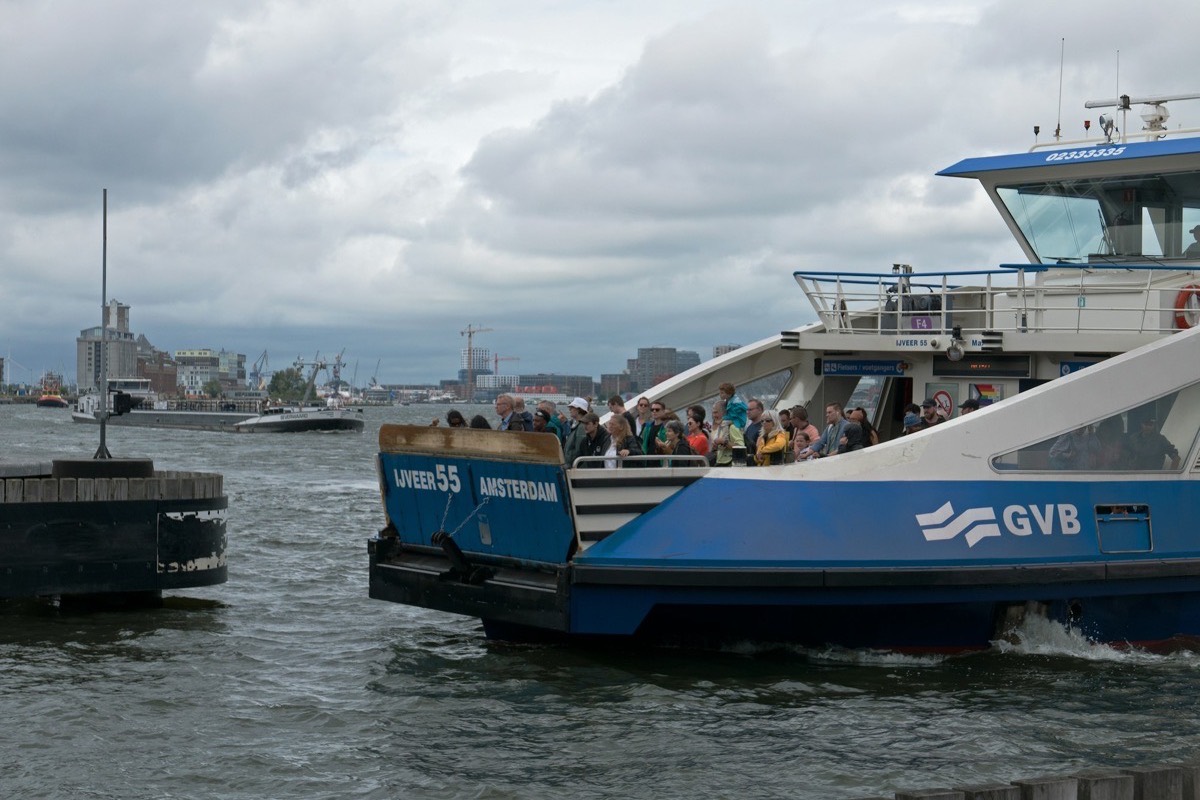
Behind Centraal Station, on the water side, a row of ferries crosses the IJ all day. They are run by the city, they are genuinely free, and there is nothing to book or tap: you walk on, you lean on the railing, you walk off. It is the single best three-minute introduction to the other Amsterdam there is.
Two of them matter, and knowing the difference saves you a wrong boat.
- The Buiksloterweg ferry is the short one, a two or three minute hop straight across from behind Centraal. It lands you next to the EYE Filmmuseum and the A’DAM Tower, and it runs around the clock. This is the one for the near side of Noord.
- The NDSM ferry is the long one, about fourteen minutes west down the river to the old shipyard. It runs roughly every fifteen to thirty minutes from early morning until late evening. The ride is half the reason to go: you sit low on the water with the whole skyline sliding past behind you, and it is, without exaggeration, the best view in the city that nobody charges for.
One local note that costs nothing to know: people turn around twenty metres too early. Stay on to the far railing, wait for the moment the boat swings out into the open channel, and the whole waterfront opens up at once.
NDSM Wharf: the shipyard that became a city
NDSM stands for the Nederlandsche Dok en Scheepsbouw Maatschappij, once one of the largest shipyards in Europe. It built ocean liners here until the industry collapsed in the 1980s and the whole terrain was left to rust. Artists moved into the empty halls because the rent was nothing, and the city, eventually, noticed. What is left is a stretch of waterfront that still looks like a working yard, all cranes and cavernous sheds and steel, but is now full of studios, murals, and the occasional film set.
The anchor is STRAAT, a museum for street art and graffiti in an 8,000 square metre former welding warehouse, the Lasloods. It calls itself the largest street-art museum in the world and it has the room to back the claim: more than 160 building-sized works, many of them painted on site, hung in a hall big enough to have assembled ships. Even if a gallery is not usually your thing, the scale of it lands. Give it an hour or two.
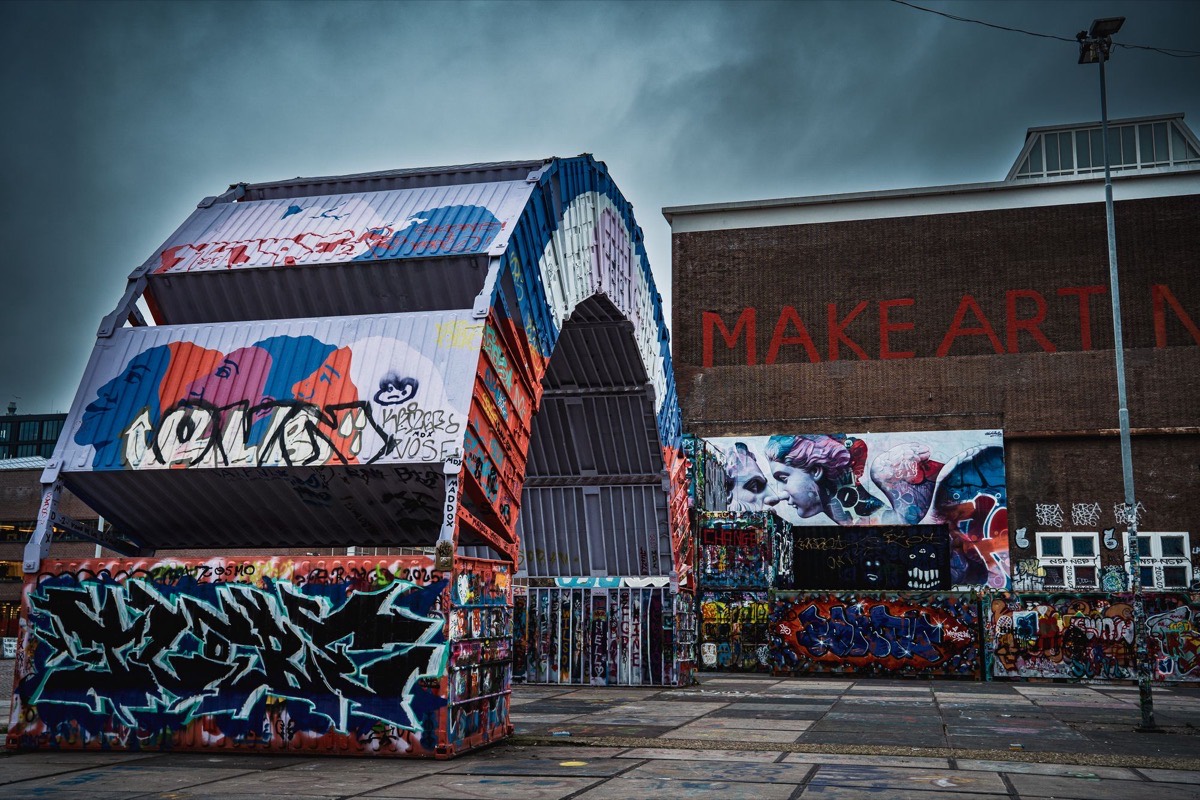
If your dates line up with IJ-Hallen, clear a morning. It is the biggest flea market in Europe, sprawling across the wharf outdoors in the warmer months and moving into the covered NDSM Loods in autumn and winter. It runs only on specific weekends, roughly every three weeks, so check ijhallen.nl for your trip window before you plan a day around it. Bring cash and arrive either at opening or in the last hour, when the sellers would rather drop a price than carry the stock home.
Along the water nearby, De Ceuvel is a café and workspace built on old houseboats beside a cleaned-up canal, a small circular-economy experiment that turned into one of the nicer places in Noord to sit with a drink. It is closing for good in early 2027, so this is a genuine catch-it-while-it-lasts, not a figure of speech.
The near side: EYE, the tower, and the swing over the edge
Take the short Buiksloterweg crossing instead and you land in a different, calmer Noord.
The white building leaning over the water is the EYE Filmmuseum, the national film museum, with a café terrace that faces straight back at the city and free exhibitions of posters and old projection equipment in the basement. Next to it, the A’DAM Tower is the old Shell headquarters turned nightlife-and-views complex. The A’DAM Lookout on the roof has Europe’s highest swing, Over the Edge, which dangles you a hundred metres up over the side of the building with the whole city underneath your feet. It is a tourist thing, unashamedly, but it is a good one, and the view down the IJ is the real reward.
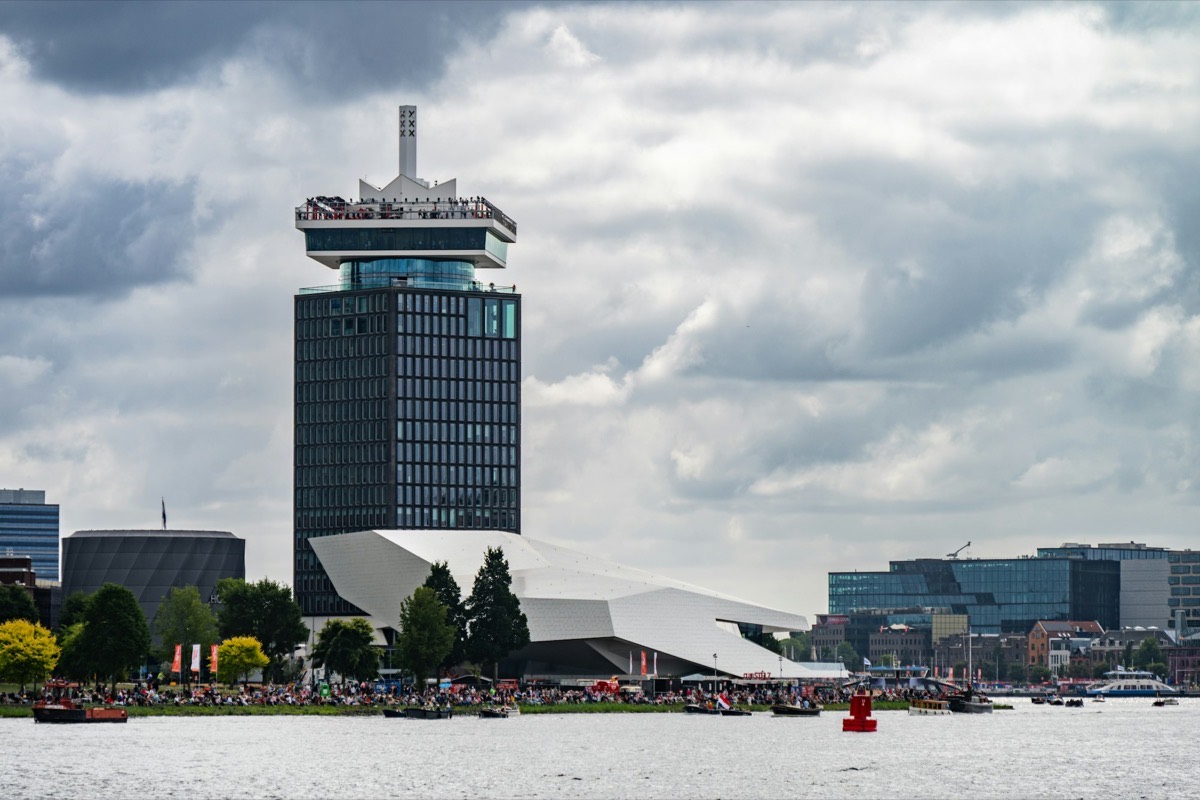
Walk five minutes inland from the ferry and the mood shifts again, into the Van der Pekbuurt, a grid of low brick streets that is one of the oldest parts of Noord and about as far from the canal-house postcard as the city gets. This is where you find Café Modern, a neighbourhood restaurant that has been quietly good for over a decade, and the kind of ordinary local life that the centre lost years ago.
Where Noord eats, drinks, and stays out late
Noord’s food and nightlife share one trait: almost all of it is in a building that used to do something else.
For dinner on the water, Hotel de Goudfazant serves serious French cooking in a vast industrial warehouse on the IJ, and is, despite the name, not a hotel at all. FC Hyena pairs a two-screen boutique cinema with a wood-oven restaurant and a natural wine list on a terrace facing the water, which is a whole evening decided in one booking: a film, then dinner, then the last ferry.
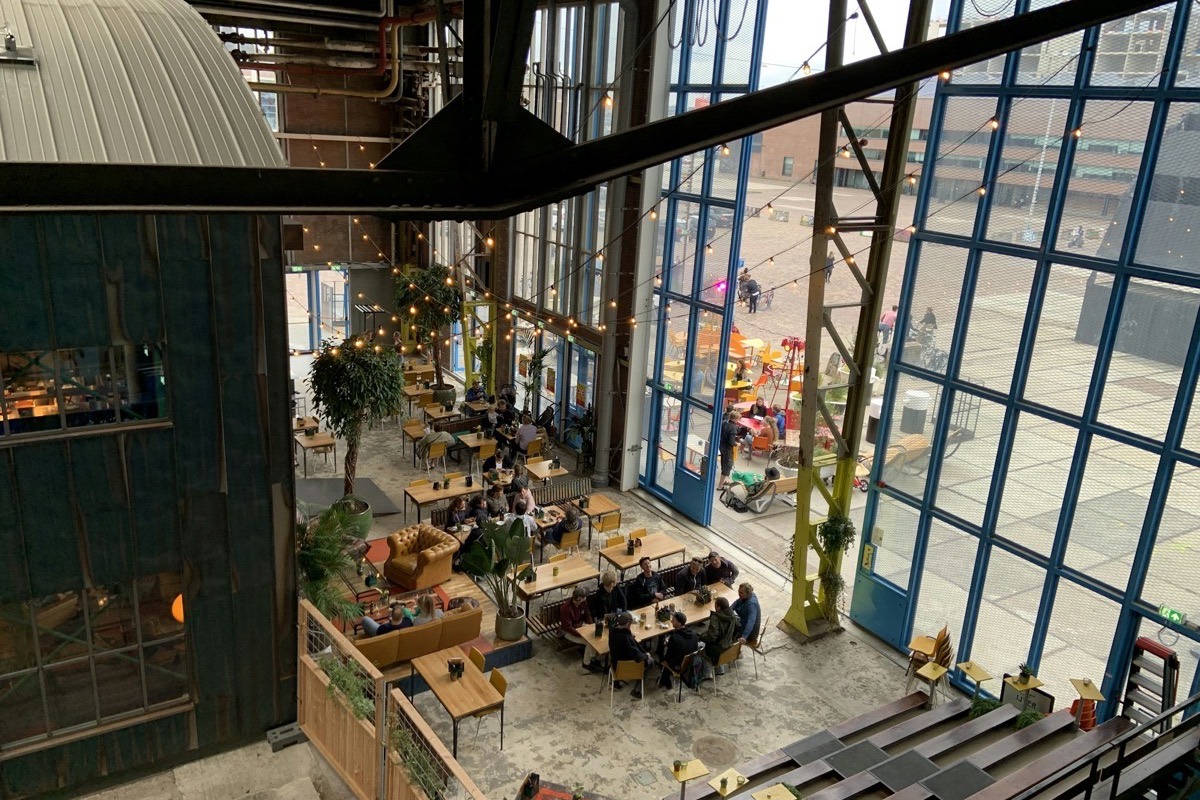
The late end of the night lives in the Hamerkwartier, a strip of old workshops a short way east of the wharf. Oedipus pours its own beer in a taproom that also houses a community radio station, and around the corner Skatecafé sits you down to dinner beside a working skate ramp before the room turns into a club. Thursday to Saturday is when the quarter is properly alive. For something more purpose-built, Garage Noord programmes adventurous nights in a former car workshop, and Shelter, the basement club under the A’DAM Tower, runs a strict no-photos policy that tells you exactly what kind of night it is.
None of this is near your hotel. That is the point of it.
Beyond the wharf: the ride into Waterland
Here is the part of Noord that even most Amsterdammers forget is right there. Ten minutes on a bike inland from the ferry, the city simply stops. What comes next is Waterland: flat green polder, grazing sheep, and a string of tiny dike villages, Durgerdam, Ransdorp, Holysloot, that look like they were painted three hundred years ago and never repainted.
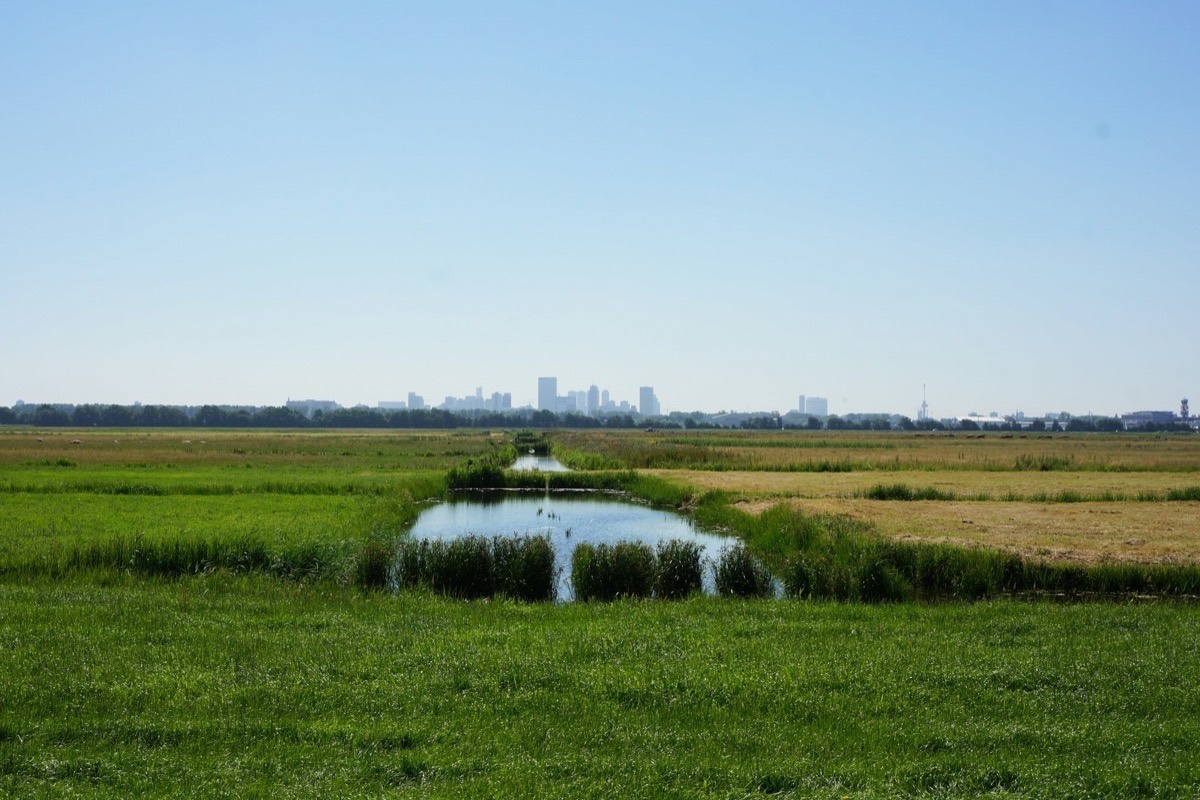
The classic loop is signposted, entirely flat, and takes a half day at an easy pace, though you can turn back whenever you like. It is thirty minutes from Centraal Station and it feels like a different country. If you have a spare morning and the weather holds, this is the local move that no search result surfaces, because it is not a sight, it is just where the city goes to breathe.
How to actually spend a day in Noord
Loosely, because over-planning Noord defeats the purpose:
- Morning. Take the NDSM ferry across for the ride and the view. STRAAT, a wander through the wharf, and IJ-Hallen if your weekend is one of its weekends.
- Midday. Coffee or a drink at De Ceuvel while it is still standing, then either back east along the water or out into Waterland if the day is clear and you have a bike.
- Evening. Cross back to the near side for a film and dinner at FC Hyena, or stay in the Hamerkwartier and let Skatecafé or Oedipus carry the night. Then the ferry home, which after dark is the best-value nightcap in Amsterdam.
The honest limit of a guide like this
This is the free version, and it is a real one: genuine places, no tourist traps, the seams a local actually knows. What a guide cannot do is know your dates. Whether IJ-Hallen falls on your weekend, whether the museum you want is open the day you are there, whether the ferry you need still runs at the hour you want to come home: those are the details that turn a good list into a plan, and they change week to week.
That is the thing a local puts together for you. You can see a real sample plan to get the shape of it, read the three-day Amsterdam itinerary a local would plan for how Noord fits into a whole trip, or go neighbourhood by neighbourhood through the rest of the city. When you are ready, see what a plan for Amsterdam covers or go straight to building one around your exact dates.
Amsterdam Noord is not a detour from the city. For a lot of people who live here, it is the city, and the water in front of it is the best thing the tourist map gets wrong. Take the ferry. Stay on to the far railing. See where it goes.